Community Dialogues for ICCM

Source: Malaria Consortium

Year of Publication:

2012

Integrated community case management (ICCM) – an approach where community-based health workers are trained to identify, treat and refer children under-five with pneumonia, diarrhea and malaria – is increasingly being used across sub-Saharan Africa to supplement the gaps in basic healthcare provision. ICCM programs have been endorsed by major international organizations and donors, and many African Ministries of Health as a key strategy for reducing child mortality. This learning paper describes Malaria Consortium’s approach to and experience of engaging local communities in integrated community case management (ICCM) in three African countries.

This learning paper looks at some key barriers to the early treatment of sick children and the interventions developed to address them, with a focus on the Community Dialogue (CD) approach. Preliminary findings drawn from the early stages of implementation show that CD has been a very effective way of identifying and filling information gaps, as well as encouraging community analysis and planning.

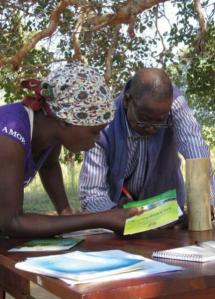
Dialogues are chaired by community leaders and co-facilitated by CHWs. Ten simple steps are outlined to organize and lead fruitful community dialogue sessions, comprising three core phases:

Exploring the topic: questioning assumptions, filling knowledge gaps, clarifying misconceptions.
Identifying issues: reflecting on personal experiences of childhood diseases’ management and prevention.
Action planning: agreeing on a few achievable individual or collective actions to ensure prompt, high-quality medical care for young children as well as appropriate ways to prevent these diseases.

Initial feedback indicates that the CD approach is highly appreciated by community-based facilitators, community members, and health center staff. Because it is grassroots-based, reaching out to communities, it allows ‘ordinary people’ to interact and reflect on health information within their villages and not at health facilities, where such interactions usually happen. Not all community members have access to radio or a phone to participate in radio phone-in programs. Others, because of low literacy, can misinterpret posters. Participants are encouraged at CD sessions to express their views, ask questions and tell their own stories and do so freely because the session is facilitated by peers rather than professional health staff.
Community Dialogues for Healthy Children: Encouraging Communities to Talk

Source: Malaria Consortium

Year of Publication:

2012

This paper looks at some key barriers to the early treatment of sick children identified by Malaria Consortium and the interventions developed to address them, with a focus on the community dialogue (CD) approach. The potential of CD to improve health outcomes has been largely recognized by practitioners and researchers. However, examples of how this works in practice in the ICCM context are rare. This paper describes the model developed by Malaria Consortium to trigger genuine dialogue within local communities about the management of selected childhood diseases. Initial lessons from the early stages of community dialogue implementation are outlined and it is proposed that an evaluation of the experiment should be allowed to contribute to efforts to identify good practices for effective community involvement in ICCM programming.

Community Dialogues for Child Health

Source: Malaria Consortium

Year of Publication:

2015

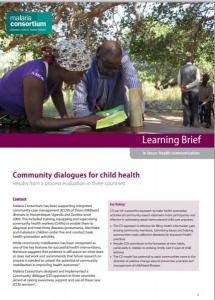
This Learning Brief summarizes a qualitative process evaluation conducted to assess communities’ response to a community dialogue approach, after one year of implementation in rural settings of three countries (Mozamique, Uganda and Zambia), in terms of outreach, relevance and intermediate results.

The study finds that community dialogues can be a powerful approach to make health promotion activities of community-based volunteers more participatory and effective in addressing social norms around child care practices, particularly in setting new social norms for early care-seeking at community health worker point of care.

Community Dialogue for Child Health: Results from a Process Evaluation in 3 Countries

Source: Malaria Consortium

Year of Publication:

2014

This learning brief presents results from a rigorous process evaluation conducted in 3 countries, aiming at assessing if the community dialogue approach implemented was appropriate and effective in raising demand for iCCM services at community level.

Community Conversation Toolkit for HIV Prevention – Facilitator’s Guide

Source: FHI 360

Year of Publication:

2010

Materials in this toolkit include a facilitator’s guide, community mobilizer’s cards, roleplay cards, storytelling finger puppets, promotional proverbs and best kept secrets throw boxes, promotional playing cards, and dialogue buttons. These formats are designed to mobilize adults aged 20 and above in communities to take action toward HIV prevention.

The toolkit is intended to complement existing HIV prevention activities and address several key drivers: concurrency, cross-generational sex, gender-based violence, and alcohol abuse. Each material in the toolkit was tested with community mobilizers and men and women ages 20 and above in community. Sixty-nine focus group discussions and 34 in-depth interviews were conducted with men and women and with trained community facilitators who lead discussions using the materials. The toolkit has also been adapted in Lesotho, Nigeria, and Swaziland and is available in 10 languages.

The Facilitator’s Guide describes each item in the toolkit and how to use it.

Club Risky Business TV Series Concept Note

Source: Johns Hopkins University Center for Communication Programs, Media 365

Year of Publication:

2009

This is concept note about Club Risky Business, a multimedia campaign in Zambia focusing on concurrent sexual partnerships. The concept note was prepared by a media company helping with the production of the show.

The note describes a 26 episode series focusing on promoting positive health-seeking behavior among the general population. The proposed series package will include 45-minute episodes with the initial season being 26 episodes and subsequent seasons being 13 episodes each. Packaged with the series are Public Service Announcements (PSA) on various health issues. Each episode or series of episodes will highlight a health concern like malaria and focus on the behavior change objective required to prevent that particular health problem. The series is targeted at the general public (young people, men and women, policy makers, professionals and opinion leaders). The intention of this series is to make the audience aware of various issues surrounding health and wellness by showing how an individual, family and the community are impacted by various and specific health issues and the contributing and/or surrounding dynamics that affect them.

Club Risky Business Creative Brief

Source: Johns Hopkins University Center for Communication Programs

Year of Publication:

2009

A strategy document for Club Risky Business, a multimedia campaign in Zambia focusing on concurrent sexual partnerships. The objective of the campaign is to serve as a “wake-up call” or “epiphany” for target groups.

The communication objectives were:

  1. Increase personal risk perception for acquiring HIV through better understanding of “window period” (viremicity) and sexual networks (role of concurrency)
  2. Increase understanding of protective behaviors (primarily partner reduction but also condom use)
  3. Increase sense of responsibility to not infect others

This video describes the development of the project.

Club Risky Business – Behind the Scenes

Source: Johns Hopkins University

Year of Publication:

2009

This is a behind the scenes documentary of the making of Club Risky Business, the centerpiece of the OneLove Kwasila! Campaign in Zambia (2009)

Club Risky Business

Source: JSI

Year of Publication:

2010

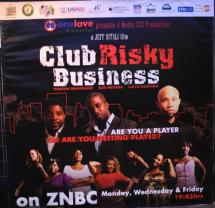
This is a USAID case study about Club Risky Business, a 10-episode fictional mini-series launched in 2009 on Zambian television. The series examined multiple and concurrent sexual partnerships (MCP) through the engaging stories of three male friends and their partners in the age of HIV.

The case study explains the formative research, the program objectives, design, monitoring and evaluation, and lists what worked well and what the challenges were. It also lists ideas for future programming and recommendations.

Child Health Interactive Poster [Zambia]

Source: Malaria Consortium

Year of Publication:

2013

Malaria Consortium supported the Ministry of Health in rolling out an integrated community case management (ICCM) program in the Luapula province of Zambia from 2009 to 2012.

Formative research conducted on the onset of the ICCM program showed that having trained CHWs (community health workers) in place is not enough to change sick child care pathways. The health communication intervention combined the promotion of community health workers’ services (trained and equipped to diagnose and treat under-fives with fever, respiratory infections and diarrhea) and Community Dialogues providing communities with a platform to extensively discuss,

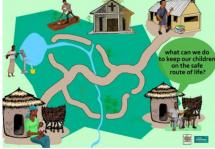
Visual materials included posters, a community dialogue guidebook, and this interactive poster and flash card set, all in the local language of Bemba. This tool was created to allow low-literacy care-givers to explore and discuss current and ideal care options in the event of childhood illness. The tool comprises a large-size poster featuring pathways (or routes) for a healthy baby to grow into a healthy school-age child, and a set of 30 colorful flash cards featuring various child conditions and care options.

During Community Dialogue sessions, facilitated by trained community members in collaboration with Community Health Workers (CHW), care-givers and key household decision-makers are asked to tell their story of what happened the last time their child was sick by placing the relevant cards along the pathway. Then, participants discuss the chosen pathway, exploring the benefits and risks of various care options, and reach an agreement on the right timing and provider for childhood illnesses as well as best prevention measures.

Monitoring and observation data show that the interactive poster and flash cards were instrumental and unanimously appreciated both by participants and community dialogues facilitators; facilitators noted that these materials made the animation of the session easier for them, as participants take ownership of the session and contribute with their story by placing the cards. Evaluation also showed that the community dialogue approach using these interactive visual materials allowed for the exploration of a topic through open discussion and filling knowledge gaps, correcting misconceptions around the three target diseases in children and possible causes.